Latest
The best intensivist in your city will retire with twenty years of unwritten cases
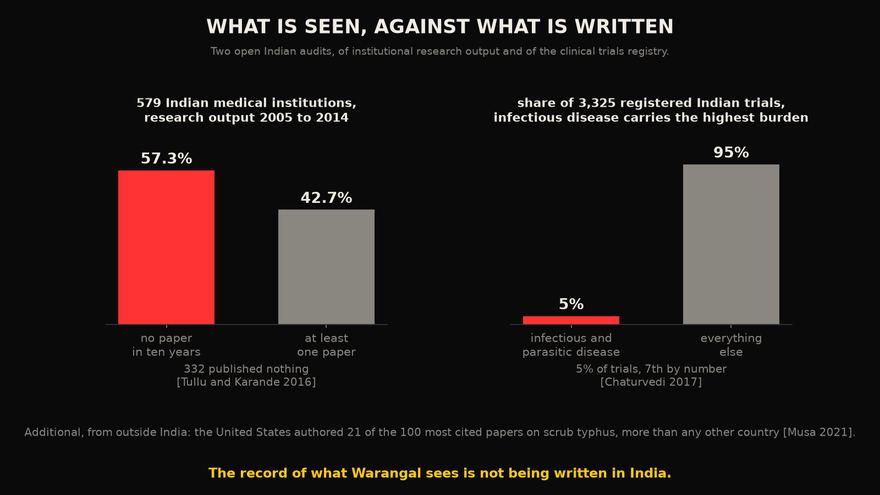
Indian ICUs see scrub typhus, snakebite and dengue shock daily, and almost none of it reaches the literature. The publishing pipeline is the reason.
Notes on measurement, timing and control in critical care.
The patient in the bed is a dynamic system, and the hospital is photographing it a few times a day. The crimson line is what the body did. The dots are what the chart recorded. These articles are about what that gap costs, what measuring it properly would take, and what has been built so far.
Latest
Indian ICUs see scrub typhus, snakebite and dengue shock daily, and almost none of it reaches the literature. The publishing pipeline is the reason.
Indian ICUs see scrub typhus, snakebite and dengue shock daily, and almost none of it reaches the literature. The publishing pipeline is the reason.
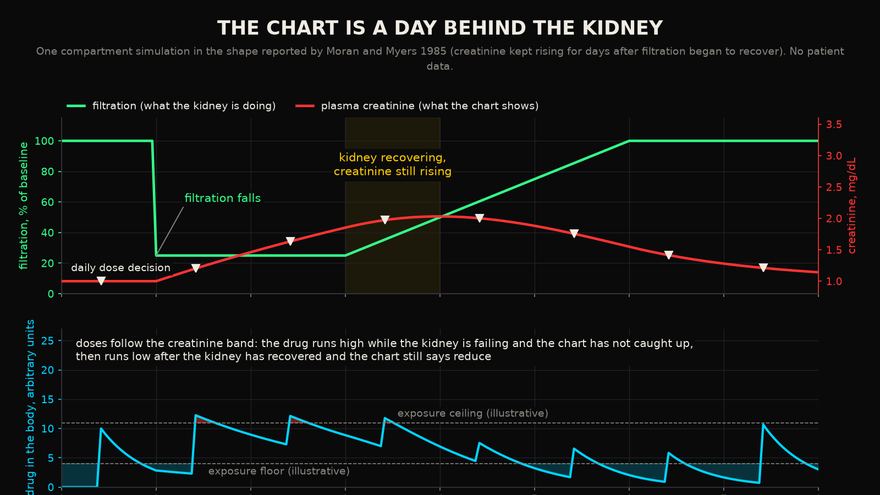
Vancomycin is dosed to a creatinine drawn hours ago while renal function is moving. The nomogram assumes a steady state the ICU patient never reaches.
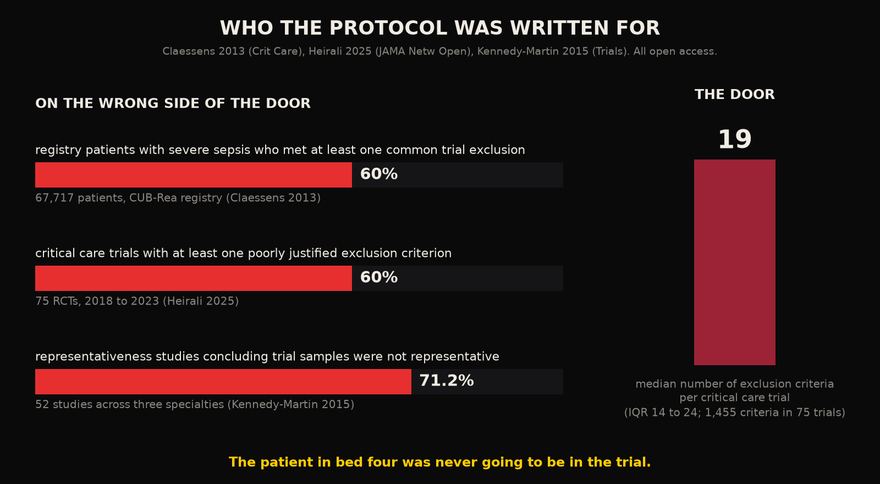
Every ICU protocol is a trial average. Most ICU patients would have been excluded from the trial. The bedside exceptions are never written down.
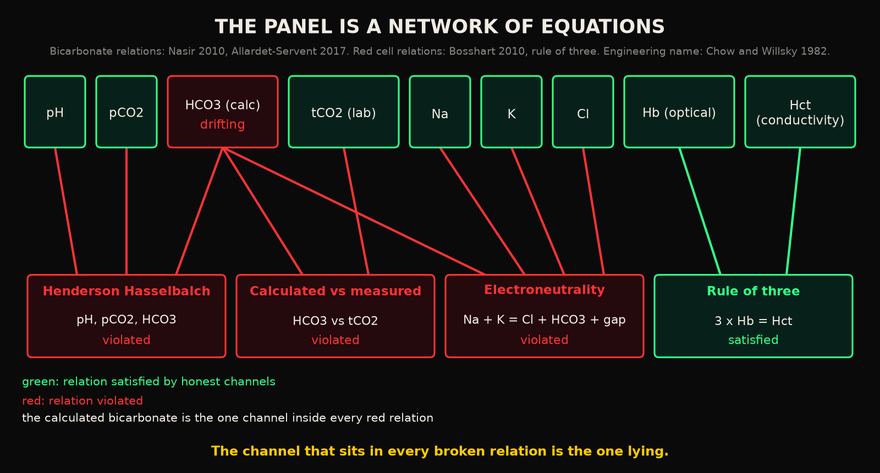
Blood chemistry obeys conservation laws. When pH, pCO2 and bicarbonate stop agreeing, the equation localises the drifting sensor without a reference sample.
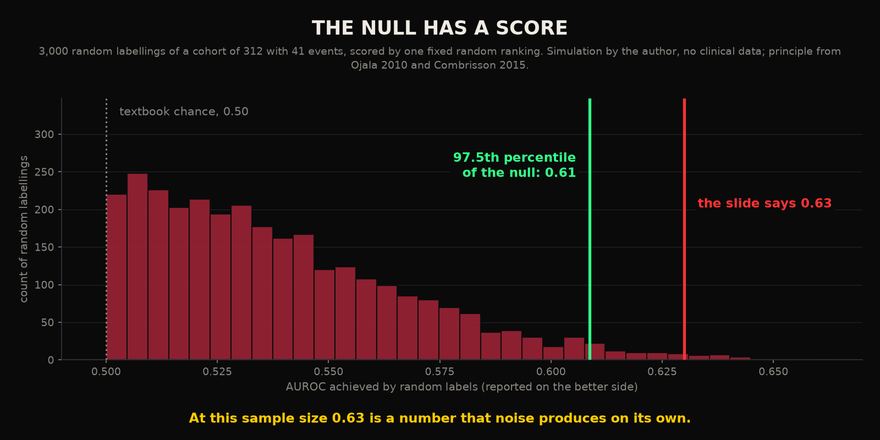
On small imbalanced ICU cohorts a random classifier scores well above 0.5. Run the permutation null, split by patient and write the stopping rule first.
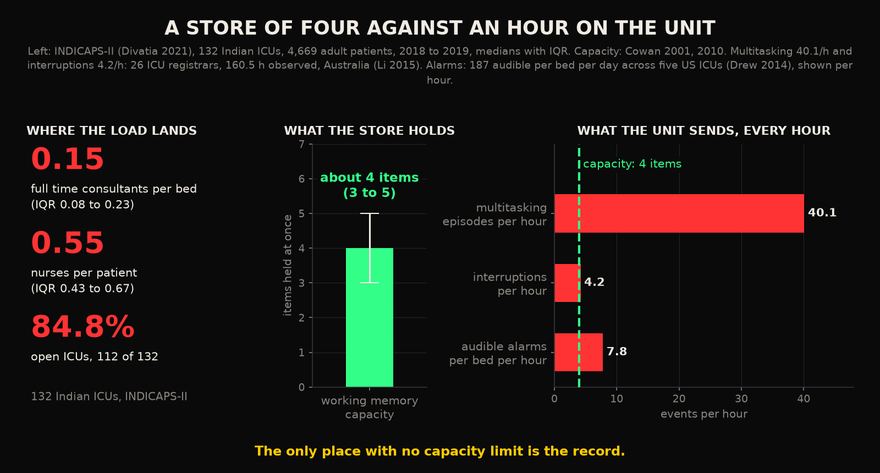
ICU doctors are interrupted 4.2 times an hour amid 187 alarms per bed per day. Working memory holds about four items. The person is the wrong bottleneck.
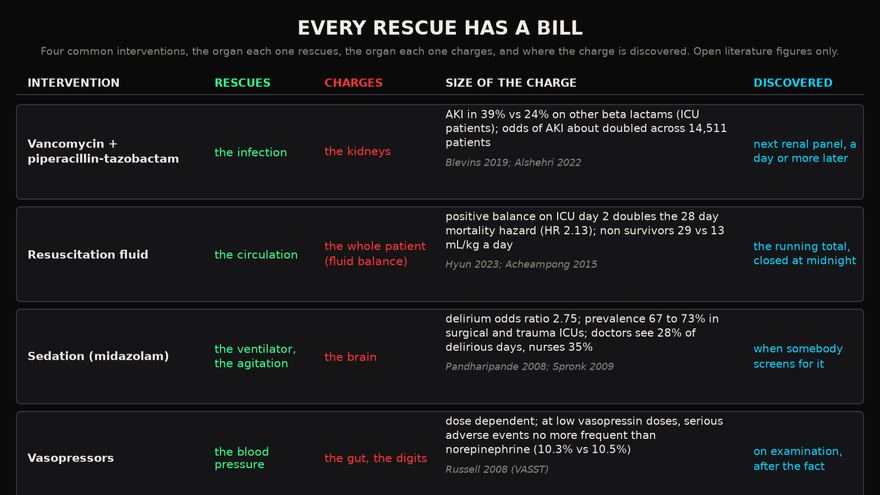
Vancomycin with piperacillin-tazobactam doubles the odds of acute kidney injury, and creatinine reports it a day late. The harm sits on an unplotted page.
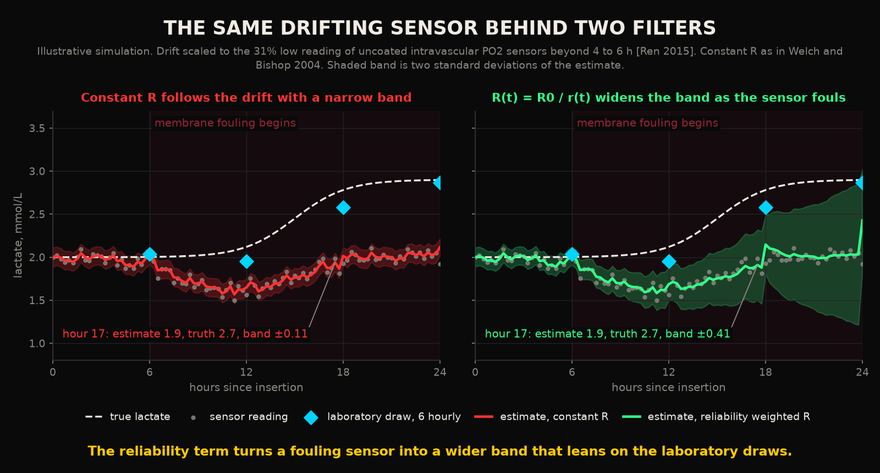
Every electrode in blood fouls within hours. A filter with a fixed noise term keeps trusting it. A reliability weighted filter widens its envelope.
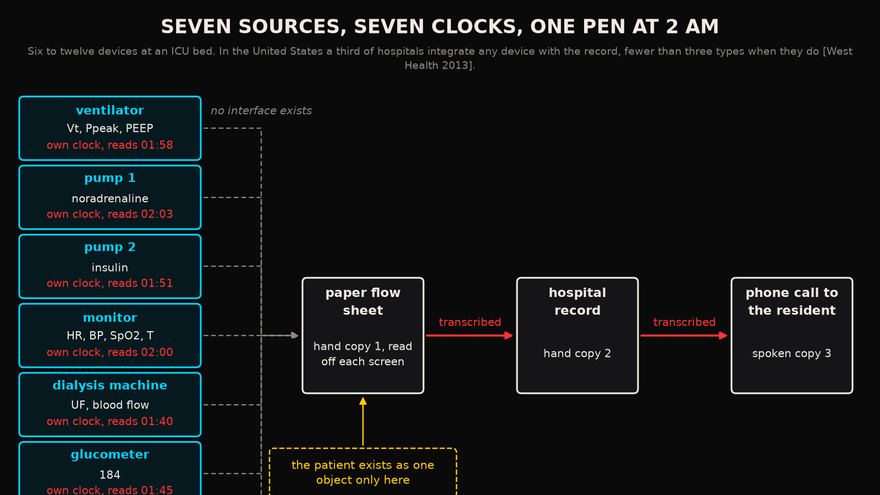
Six to twelve devices surround an ICU bed and almost none of them share data. The only integration layer is a nurse with a pen, and the record shows it.
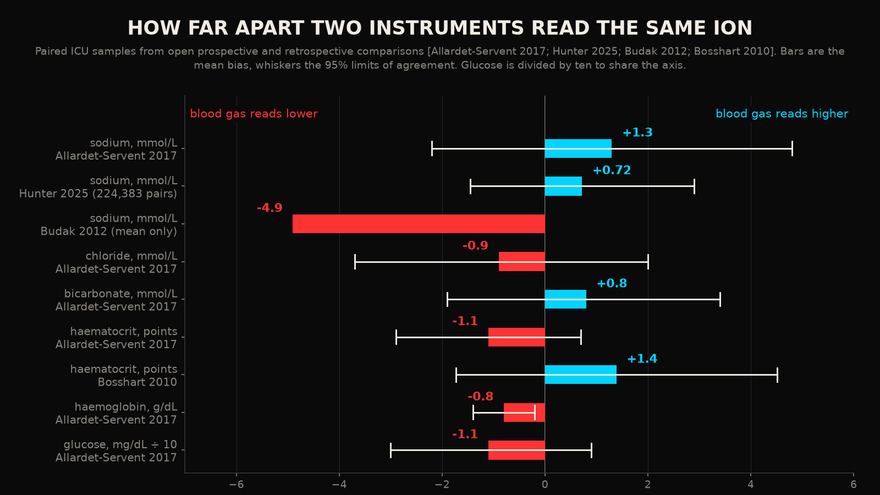
MIMIC-IV stores sodium, glucose and haematocrit under two itemids, chemistry and blood gas, and the offset between them is the size of a published effect.
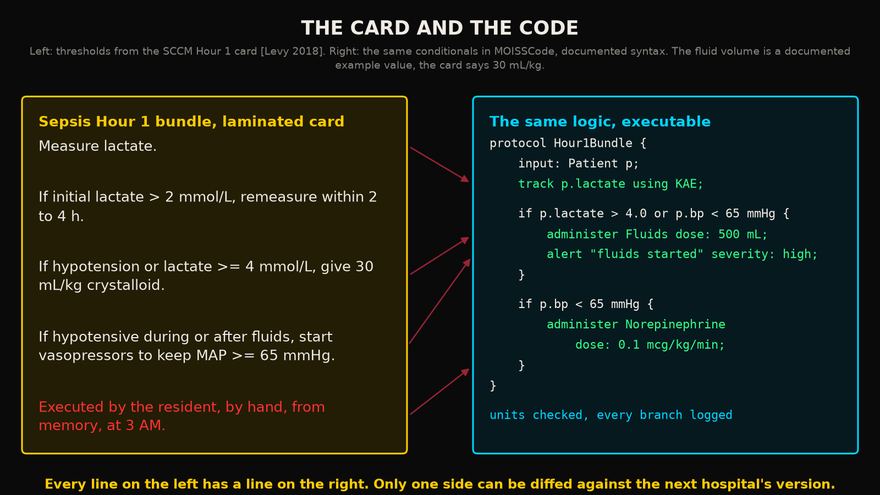
Sepsis bundles, insulin nomograms and order sets are conditionals, loops and lookup tables. Clinical protocols are programs, and they need a language.
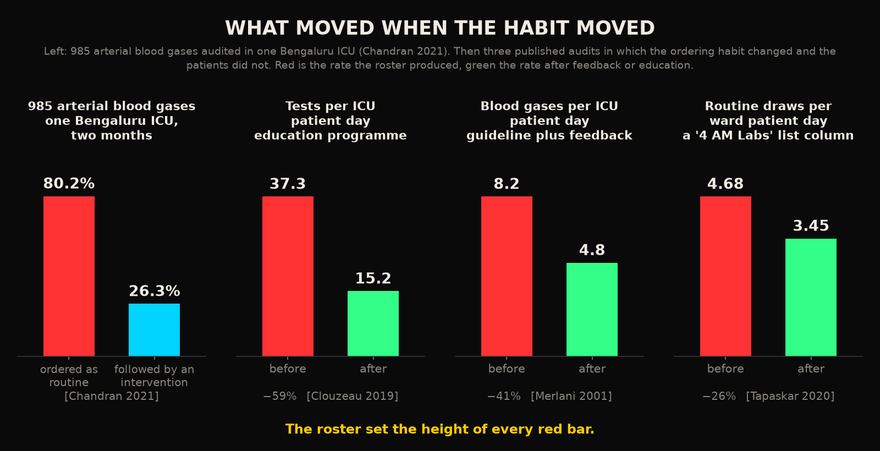
ICU blood tests run on a daily timetable set by phlebotomy rounds, lab batches and nurse ratios. 'No meaningful change expected' describes the roster.
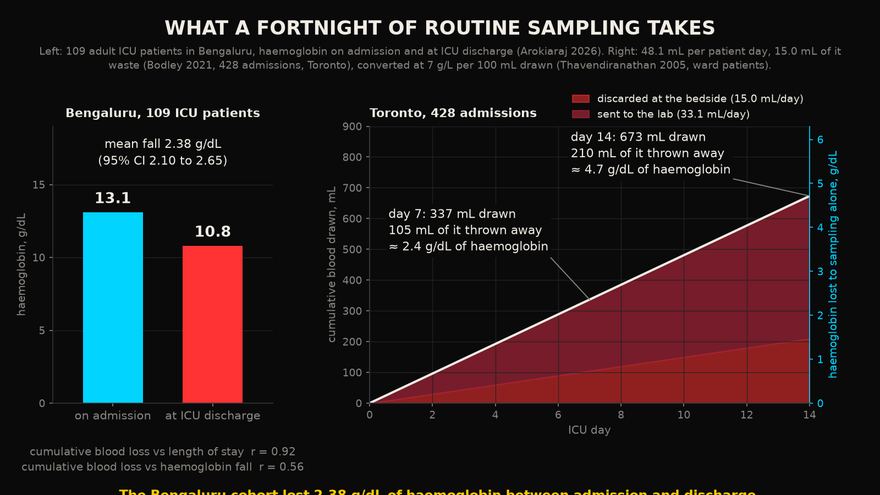
ICU patients lose about 48 mL of blood a day to testing, a third of it discarded. Iatrogenic anaemia is a design flaw in sampling, and the fixes are known.
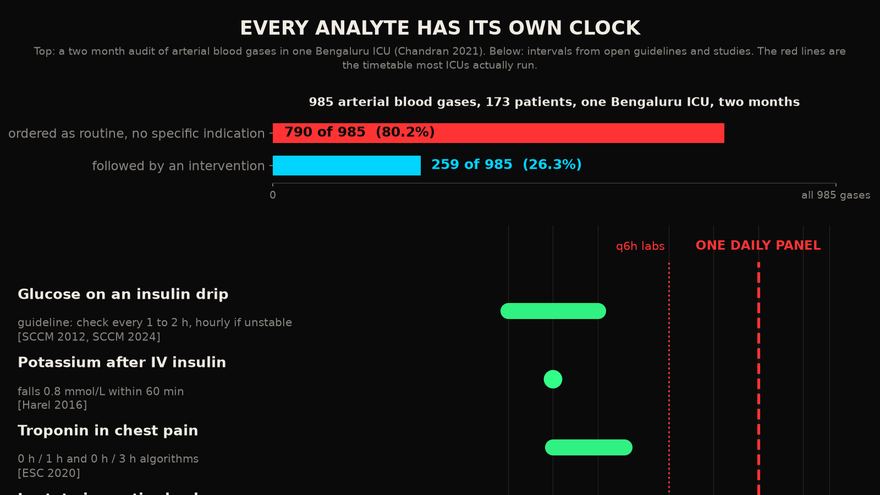
Glucose, potassium, lactate and bilirubin change on different clocks. Hospital blood tests are drawn on one schedule that was never derived from any of them.
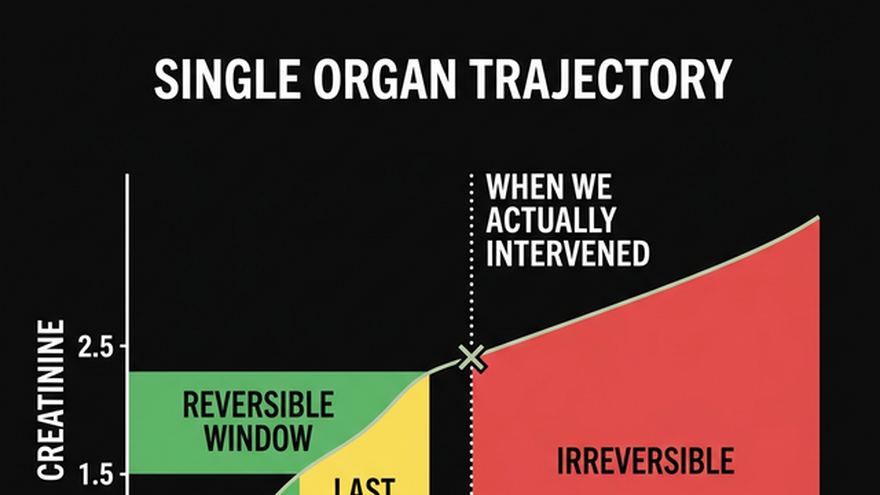
In sepsis the window in which antibiotics change the outcome is computable from the lactate trajectory, and current monitoring closes it before anyone sees it open.
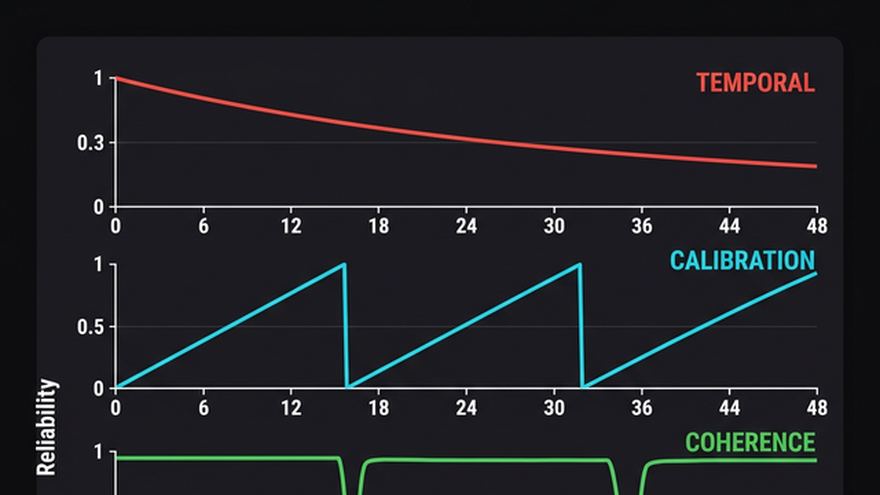
A textbook Kalman filter on ICU biomarkers fails once the sensor drifts. Scaling measurement noise by a reliability score lets the filter decide how much to trust each reading.
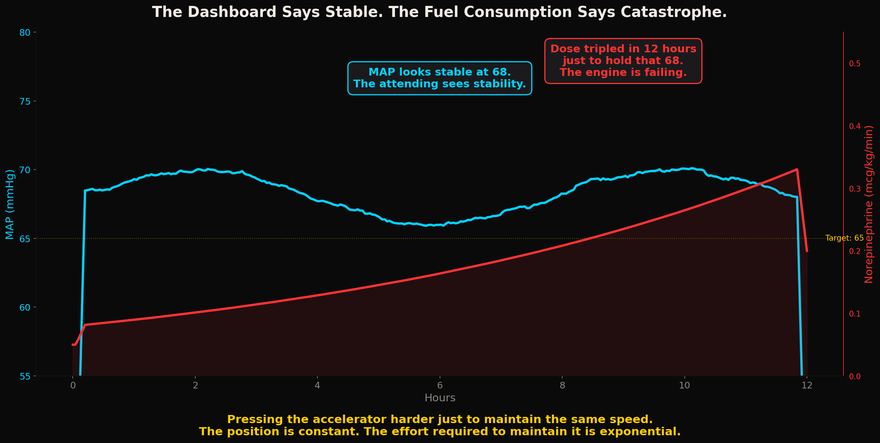
An ICU patient is a coupled nonlinear system with twenty state variables and thresholds. Aerospace tracks such systems in real time; medicine photographs them twice a day.
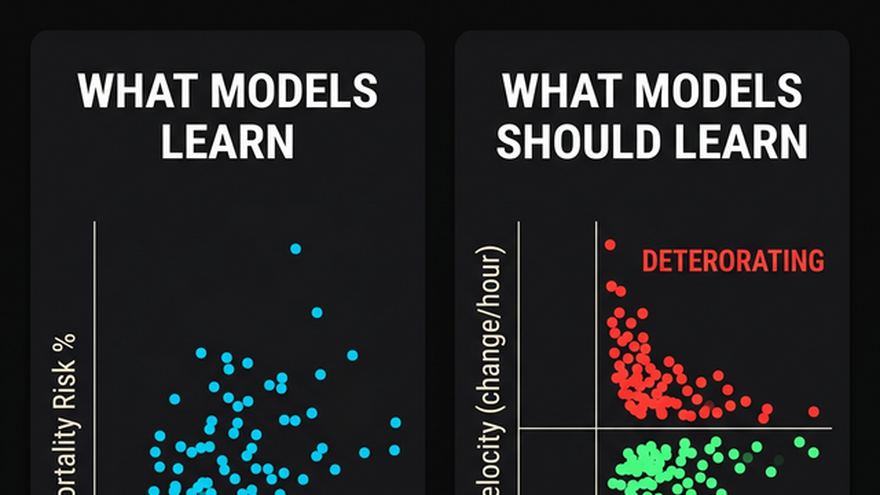
ICU datasets record snapshots sampled far below the rate physiology changes. Models trained on them learn aliased correlations, which is why sepsis models fail in deployment.
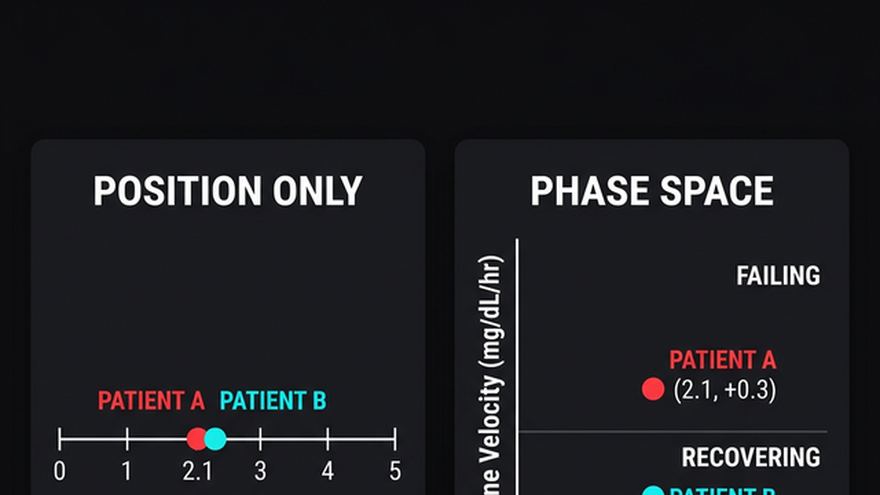
A creatinine of 2.1 describes a failing kidney and a recovering one equally well. Clinical monitoring reports position without velocity, and the frame is wrong.
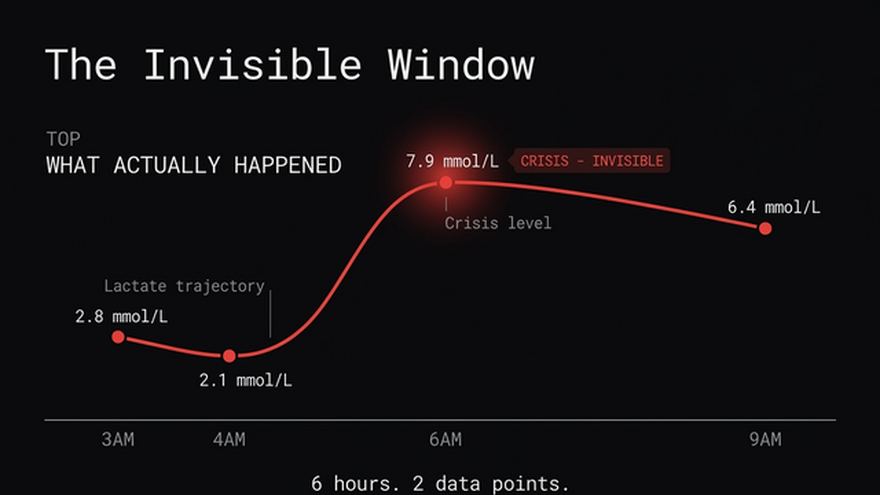
ICU labs drawn six hours apart leave the trajectory between them invisible. A sampling theory problem has been hiding in critical care for decades.
